
The Intranet built for Google Workspace

How to Stop the Digital Graveyard: The 3 Pillars of Google Workspace Intranet Governance
Sherwin Steel
Technology Consultant, Steegle.One


You’ve been here before. A new intranet launches, engagement spikes, and everything feels perfectly organised. But fast-forward six months, and the quiet decay begins. An updated policy is emailed to the team, but the intranet version is forgotten. Employees waste twenty minutes searching for standard operating procedures, only to uncover three conflicting documents. The agitation peaks when your workforce stops using the platform entirely because they simply cannot trust the information it provides. The solution isn't a sleeker design or a bloated rulebook; it is a lightweight, enforceable framework. By implementing intranet governance best practice natively within Google Workspace, you can automate content lifecycles and rebuild employee trust.
What is Intranet Governance Best Practice?
Intranet governance best practice is a structured framework of roles, processes, and technology controls. It defines who creates content, how it is reviewed, and when it is retired. This ensures all internal digital workplace content remains accurate, securely owned, and highly trusted without creating administrative bottlenecks.
The Three Pillars of Effective Intranet Governance
According to "Industry leaders with Steegle", an intranet cannot survive on human memory; it requires three interdependent pillars: ownership, process, and technology. Ownership is the foundational element. Every single page or document must have a named human being responsible for it—not just a vague department. When accountability is diffused across an entire team, the content effectively belongs to nobody, and critical updates are ignored.
The second pillar is process. Ownership without process is merely intention. You must document clear workflows for creating, reviewing, and retiring content. A strong process defines exactly how often a document must be audited, preventing the intranet from becoming a bottomless pit where information goes in but never comes out.

Technology is the final engine that enforces these rules. Relying on employees to remember an annual review date is a guaranteed failure. According to Steegle.One's deployment strategy, a Google Workspace intranet uses native tools like Google Drive permissions and Steegle Share to enforce access control and visibility automatically.
So what? If you pull away any of these three pillars, the entire governance framework collapses, resulting in a cluttered, untrusted platform that actively damages internal communications.
Now what? Create a governance register today. Map every section of your intranet to a specific owner, establish a recurring review process, and rely on native technology to enforce those permissions seamlessly.
Table 1: Traditional vs. Steegle.One Governance Pillars
| Governance Pillar | Traditional Approach | Steegle.One & Google Workspace Approach |
|---|---|---|
| Ownership | IT manages all content updates. | Department heads own their sections via Drive. |
| Process | Ad-hoc updates when someone complains. | Scheduled calendar reminders for annual reviews. |
| Technology | Complex, secondary CMS permissions. | Native Google Workspace permissions & Steegle Share. |
The Subtraction Method: A Zero-Clutter Content Strategy
Most internal communications strategies mistakenly focus on what gets added to the intranet, but the more critical conversation is about what gets removed. Believing that more content equals a better digital workplace creates massive decision fatigue and destroys search relevancy for your employees.
This is where the subtraction method becomes your most powerful governance tool. Before any new piece of content is published, the creator must ask: "What existing content does this replace?". Every new operational policy must explicitly retire the old one, ensuring that new content is substituted rather than merely accumulated.
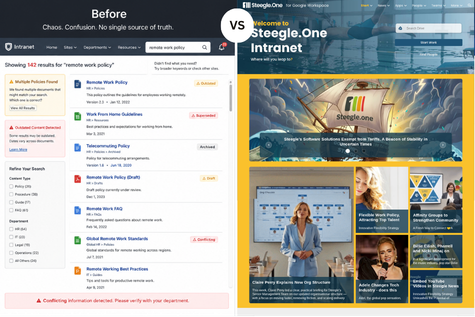
According to Steegle's governance guidelines, this strict discipline actively prevents the accumulation of duplicate and outdated content. Furthermore, because Steegle.One mirrors your Google Drive architecture, archiving a document in Drive immediately removes it from the intranet—meaning there is no secondary deletion step required.
So what? Ungoverned content compounds over time. Outdated content actively destroys trust in the current content because employees cannot differentiate between the two.
Now what? Build the subtraction method into your content submission workflow. Add a mandatory field asking publishers to link the exact document their new content is replacing before approval is granted.
Table 2: The Cluttered Way vs. The Subtraction Method
| Content Action | The Cluttered Way (No Governance) | The Subtraction Method |
|---|---|---|
| Publishing a 2026 Policy | Uploaded alongside 2024 and 2025 versions. | The 2025 version is archived; 2026 replaces it. |
| Updating a Form | A new link is added; old link remains active. | Original Google Doc is overwritten. Link stays the same. |
| Retiring a Project | Page is abandoned and left in the navigation. | Folder is moved to a Drive archive; page disappears. |
The Subtraction Audit
During your quarterly governance review, run a dedicated "subtraction audit". For every piece of content added in the last quarter, verify that the content it replaced was actually archived. This single habit eliminates the most common source of intranet duplication.
Securing AI and Audience-Specific Content Natively
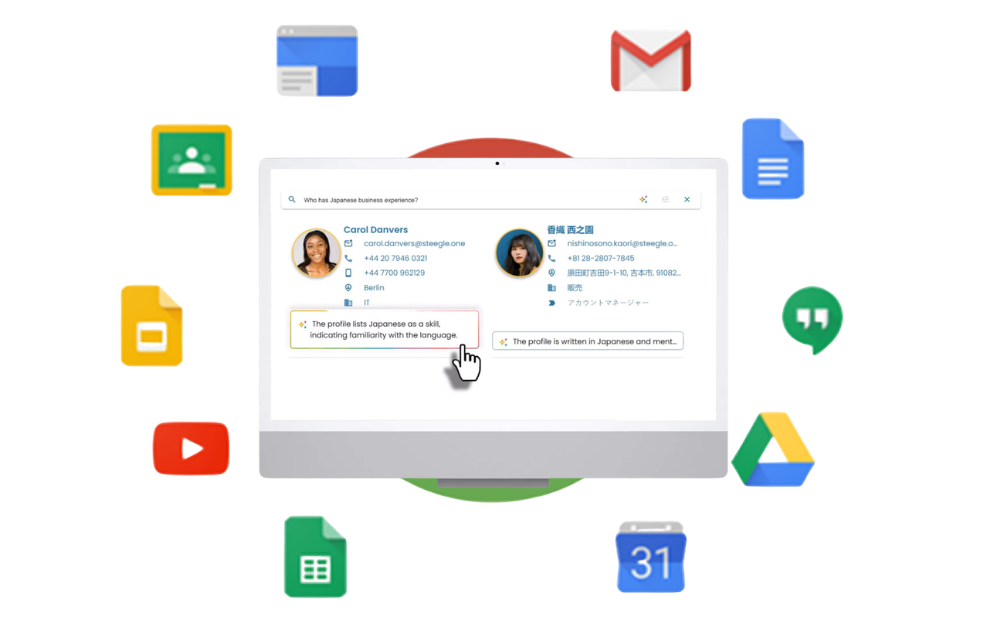
As artificial intelligence integrates into the digital workplace, governance must adapt to manage how these intelligent systems process internal data. Features like Steegle People utilize your organization's private instance of Google Gemini to power an intelligent knowledge network and employee directory.
From a traditional governance perspective, AI introduces fears of data hallucinations or privacy breaches. However, according to best practices for Steegle.One, native AI operates entirely within your encrypted Google environment. It only surfaces information that employees explicitly add to their own profiles, ensuring total data sovereignty and privacy compliance.
This native approach also drastically simplifies audience-specific content visibility. Instead of managing a separate, complex user database—which introduces administrative bloat—Steegle Share reads your exact Google Workspace permissions. If an employee lacks access to a restricted Google Group, the content is completely hidden from their intranet view, ensuring zero unauthorized access.
So what? Managing secondary permissions in third-party software creates terrifying security gaps and heavy IT workloads.
Now what? Leverage your existing Google Workspace structure. Manage all content visibility through Google Groups and rely on your native infrastructure to keep AI tools compliant.
Table 3: Content Risk Tiers & Review Frequencies
| Content Tier | Examples | Review Frequency | Approval Level |
|---|---|---|---|
| Tier 1 — High Risk | HR policies, compliance docs. | Annually (minimum). | Senior stakeholder. |
| Tier 2 — Medium Risk | IT guides, operational procedures. | Annually. | Section owner. |
| Tier 3 — Low Risk | News, events, team updates. | 90-day archive review. | Publisher. |
Building Your Governance Workflow with Google Tools
One of the most overlooked benefits of running a Google Workspace intranet is that you already own the exact tools required to build a flawless governance workflow. You do not need to procure specialized governance software or invest in an expensive third-party CMS subscription.

A practical workflow utilizes Google Sheets as your central Content Governance Register, tracking every page, its owner, and the next review date. Google Forms acts as your intake mechanism for content requests, capturing exactly what existing content is being replaced and ensuring all new submissions are properly vetted before publication.
Finally, Google Calendar transforms your framework into a lived habit by triggering recurring review reminders, while Google Drive natively handles all access control. When an employee leaves the organization, their edit access is automatically revoked by Google Workspace, leaving your intranet perfectly secure without any manual intervention.
So what? Administrative complexity kills governance adoption. If your framework requires users to learn a new, clunky system, they will bypass it.
Now what? Set up your foundational governance tools today using Sheets, Forms, and Calendar, keeping the entire process frictionless and native to the Google apps your team already knows.
Standardize Employee Profiles
To get the most out of Steegle People's AI discovery, create a standardized onboarding checklist that requires new hires to fill out specific fields (skills, past projects, spoken languages) in their Google Workspace profiles. Better data input equals better AI-driven connections.
Frequently Asked Questions
Steegle.One for Google Workspace
-
A full audit should occur annually for the entire site. However, high-risk sections—like compliance documents, HR policies, and IT security guidelines—require mandatory quarterly reviews to catch drift early and guarantee absolute accuracy.
-
Because Steegle.One relies entirely on Google Drive permissions, restructures are seamless. You simply update the Google Group permissions or Drive folder access, and the intranet automatically inherits the new team structure and rules instantly.
-
The overarching framework should be owned by a senior leader, typically the Head of Internal Communications, HR Operations Lead, or Digital Workplace Manager. They define the standards, while departmental heads act as the hands-on owners of their specific content.
-
No, news feeds are historical by nature. The subtraction method applies primarily to evergreen reference materials, standard operating procedures, and policies. However, news articles should still be tagged by year to prevent clogging current search results.
-
Yes, this is highly recommended. You can use Google Forms as an intake workflow where employees submit content requests. The communications team can then review, edit, and approve these submissions before officially publishing them to the intranet.
-
Distribute ownership to section owners while centralizing your standards. The communications team sets the rules, section owners have editorial autonomy within those rules, and Google Drive permissions automatically handle technical enforcement without requiring IT support tickets.
Transform Your Digital Workplace Today
Intranet governance best practice doesn't have to mean endless administrative headaches or complex new software. By shifting the burden of access control and lifecycle management onto the automated tools already built into Google Workspace, you can maintain a clean, trustworthy, and highly secure digital hub. Stop wasting hours hunting for the right document and patching security holes manually. Audit your Google Groups today, and discover how a Steegle.One deployment can seamlessly govern your digital workplace. If you are moving off legacy systems, explore the Steegle Migration Center to transition your SharePoint environments securely into Google Workspace.
#IntranetGovernance, #GoogleWorkspace, #InternalCommunications, and #DigitalWorkplace.


Establish Robust Governance
Explore how our structured platform transforms digital chaos into an organized, reliable ecosystem. Discover tools for role-based permissions, content lifecycle management, compliance tracking, and centralized admin hubs designed to secure your entire workspace.
Intranet Governance Guide
Discover how Steegle.One best practices help you establish clear governance to keep your company intranet secure, organized, and reliable.

Effective Intranet Governance
See how C2 Management overcame communication challenges using Steegle.One. Learn how they built an easy-to-manage platform with clear intranet governance.
Intranet Audit & Governance
Keep your Google Sites intranet healthy and secure. Explore Steegle.One expert tips for effective site auditing and sustainable intranet governance.
Digital Asset Automation
Improve efficiency and compliance using Steegle.One. Uncover the best practices for managing healthcare workflows and robust intranet governance.