The Intranet built for Google Workspace

Building a Sustainable Digital Workplace
and How Steegle.One Solves It Simply
Sherwin Steel
Technology Consultant, Steegle.One


We’ve all been there. A vital policy update gets swallowed by a busy Slack channel, or a new hire asks for the onboarding guide and receives three contradictory links. Before long, a disjointed document humorously titled "Company Handbook FINAL v3 (2)" quietly becomes your company’s unofficial source of truth.
When critical information gets scattered across unmanageable folders, the temptation to buy a quick "plug-and-play" intranet is incredibly strong. But these rapid deployments almost always turn into digital "ghost towns." Why? Because they act as isolated destinations. Forcing an employee to leave their natural workflow, open new tabs, and second-guess if they’re looking at the right version of a file creates severe cognitive drain.
A sustainable digital workplace doesn't force people to adopt a new ecosystem; it integrates seamlessly into the tools they already use—like Google Workspace—acting as a secure, single source of truth.
The 60-Second Audit:
Ask five employees (including a remote worker) to find a specific, non-obvious internal policy. If it takes them more than 60 seconds to find the correct version, your current architecture is costing you far more than a simple software license fee.
The "Scavenger Hunt" Tax
Information friction is a silent productivity killer. IT departments meticulously track system uptime and help-desk ticket resolution, but they rarely measure the "scavenger hunt tax." This is the time employees waste digging through improvised Notion pages or deep Google Drive folders just to find the latest travel policy or brand guideline.
For business leaders, the financial toll is staggering. If every employee in a 500-person organization loses just 15 minutes a day to this friction, the business leaks over 30,000 billable hours a year. Beyond the hard costs, this constant context-switching destroys focus, breaks momentum, and frustrates your team.

Curing the Ghost Town Effect
Legacy intranets fail because they treat information like a static billboard. In a fast-moving business, manual site updates are usually the first thing an overwhelmed Internal Communications team abandons. Once employees realize a homepage is outdated, they simply stop visiting.
To cure this "stale content syndrome," you need an automated information lifecycle. Solutions like Steegle News integrate directly into Google Workspace to offer scheduled publishing, automated expiration dates, and role-based targeting. A software engineer sees technical updates, while a sales rep sees market wins—cutting through the corporate noise so people only see what actually matters to them.
| Feature Capability | Legacy / Improvised Intranets | Sustainable Digital Workplaces |
|---|---|---|
| Content Lifecycle | Manual updates, leading to stale content and lost trust. | Automated scheduling and expiration dates via data stores. |
| Information Architecture | Disconnected islands and static homepage billboards. | Integrated ecosystems and active information flows. |
| Audience Targeting | One-size-fits-all generic homepages that create noise. | Role-based channels so users only see relevant updates. |

Why Native Platforms Beat "Bolt-On" Software
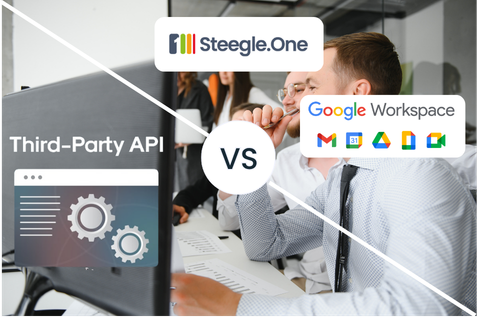
When you buy a third-party intranet, you usually have to sync highly sensitive directory data and employee profiles to an external vendor’s server. This introduces major compliance risks and data syncing headaches.
A native architecture changes the game. Platforms built inside the Google Workspace ecosystem, like Steegle.One, operate entirely within your governed environment. Because they don't act as a data processor, your data never leaves your direct control. Plus, you avoid the predatory "SaaS tax"—those unpredictable price hikes that happen when vendors force bundle new features.
Dynamic Permissions:
Never upload a document directly to your intranet. The moment a newer version exists elsewhere, your intranet is wrong. Instead, embed it from a governed Google Drive folder. Using native tools ensures viewers only see what they natively have access to, saving IT from double-handling permissions.
Integrating Culture and Real-Time Collaboration
A true digital headquarters connects people, not just files. A standard PDF org chart is practically obsolete the second you export it. But by syncing directly with your Google Workspace Directory, you can create a live, searchable expertise database. Need to instantly find "the person who knows Python"? A dynamic directory makes that invisible expertise visible instantly.
Furthermore, building a connected culture shouldn't require expensive, standalone employee recognition apps. By embedding peer recognition and milestone tracking directly into your native intranet, you drive engagement and build culture right where your employees already spend their day.
Modernizing Workflows: The Migration Imperative
Organizations migrating from legacy Microsoft 365 environments to Google Workspace often face a daunting transition. Complex SharePoint intranets, employee handbooks, standard operating procedures (SOPs), and deep file libraries must be moved securely. The strategic mistake many companies make is trying to perfectly recreate their messy SharePoint architecture inside Google Sites. A sustainable strategy involves auditing the content first, separating what needs to be moved from what should be retired, and transferring the remaining knowledge into a native Google environment.
A major operational pitfall during this transition is lingering legacy licenses. Many organizations continue paying heavily for Microsoft Power Apps simply because their operational forms and business workflows remain trapped in that old ecosystem. The strategic response is a phased migration strategy. By replacing lingering Power Apps with Google AppSheet and Apps Script automations, businesses can gain complete ownership of their workflows, reduce recurring costs, and eliminate their dependency on Microsoft.
| Migration Challenge | Legacy Approach | Sustainable Native Approach |
|---|---|---|
| SharePoint Intranets | Moving the mess to a new address without an audit. | Secure transfer of curated SOPs and handbooks into Google Sites. |
| Power Apps Dependency | Paying dual licenses for Microsoft and Google indefinitely. | Phased rebuild using native AppSheet and Google Apps Script. |
| Folder Chaos | Creating complex, hard-coded permission matrices. | Curating Drive into a structured, dynamically permissioned hub. |
The success of this comprehensive modernization is well-documented. Beyond Meat's HR leadership noted that their globally deployed Steegle intranet received excellent feedback post-launch, proving that the architecture natively supports multinational scale. Similarly, the Soar Autism Center leveraged a custom Google Sites intranet to successfully scale their internal communications and fix file access. These outcomes prove that a sustainable digital workplace is not just about launching a fast site; it is about building a secure, integrated, and automated ecosystem designed to grow alongside your business.
Frequently Asked Questions
Steegle.One for Google Workspace
-
A basic but functional intranet can be operational within four to six weeks. By utilizing Steegle's "intranet-in-a-box" approach—which combines Google Sites with pre-built Steegle Tools and expert consultancy—organizations can bypass multi-month deployments and go live in just weeks, delivering immediate value to their teams.
-
Three ways: separate Sites for major audiences, Google Drive permissions for embedded files, and Steegle Share widgets that automaticallyOut of the box, Google Sites provides an excellent foundation but lacks enterprise-grade connective tissue, such as native news lifecycle management, dynamic directory integration, or role-based content targeting. Steegle.One addresses these specific gaps with purpose-built tools designed to run natively within Google Workspace, turning a standard site into a fully governed, enterprise-ready platform. show users only what they can access in Drive—no audience groups required.
-
It is highly secure because it operates exclusively within your Google Workspace tenant and utilizes its existing authentication protocols. Tools like Steegle People, News, and Share are built using Google Apps Script to leverage your existing single-sign-on (SSO) experience. Most importantly, Steegle does not act as a data processor; they only receive license keys and a monthly user count, meaning they cannot see any personally identifiable information (PII) or intranet content unless explicitly granted access.
When migrating to Steegle.One, organizations typically find that their SharePoint's sophisticated audience management features weren't being used effectively anyway. Instead of recreating that complexity, we help teams transition to a simpler model built on Google Drive permissions and Steegle Share, which delivers the same security and relevance with a fraction of the administrative burden.
Our proven migration methodology ensures a smooth transition, with strategic change management and targeted training to drive adoption. We've successfully guided organizations through this shift, and the feedback is consistently positive: teams appreciate how much easier the new system is to maintain while delivering better results. [Webmaster: Link to "Migration Case Studies" athttps://one.steegle.com/migration/sharepoint]
-
Yes. Steegle specializes in complex SharePoint-to-Google migrations, securely transferring your entire knowledge management ecosystem—including SOPs, policies, forms, and handbooks—into a native Google environment. Furthermore, Steegle experts can rebuild lingering Microsoft Power Apps workflows using native Google AppSheet and Apps Script, allowing you to cut costs and entirely eliminate your dependency on Microsoft.
-
Yes, the tools are fully responsive. Steegle offers a dedicated Steegle.One mobile app, ensuring your knowledge hub, news feeds, and forms are fully accessible from any device, whether your team is at a desk or out in the field.
-
While the fear of low adoption is completely valid—especially if your team has been burned by disconnected platforms in the past—the solution lies in workflow integration, not just better software. Employees abandon intranets that force them to context-switch, remember new logins, or sift through irrelevant corporate noise. By building natively within Google Workspace using tools like Steegle.One, your digital workplace lives exactly where your employees already work. When you combine seamless SSO access with role-based news targeting (ensuring they only see what matters to them) and built-in peer recognition, the platform naturally evolves into an indispensable daily resource rather than a forced destination.

Taking the Next Step with Steegle
Building a sustainable digital workplace means abandoning the illusion of quick-fix third-party tools and ending your reliance on disconnected, expensive software islands. From custom Google Sites design and full SharePoint migrations to bespoke AppSheet development, Steegle provides the secure, Google-native architecture your business needs to scale.
By combining productized solutions with expert design, rigorous technical development, and comprehensive training, Steegle partners with you to construct a dynamic digital headquarters that your employees will actually use.
Ready to eliminate information chaos and truly unleash the power of your Google Workspace? Discover the benefit of working together in your new digital home.
#SteegleOne #GoogleSites #Intranet #InternalCommunications #GoogleWorkspace #DigitalWorkplace #AudienceManagement #SharePointMigration #EmployeeEngagement #SimplifyWork
Related Insights
-
![Healthcare Burnout]()
Tackling Healthcare Worker Burnout: How Steegle.One Intranet Can Help
Tackling Healthcare Worker Burnout: How Steegle.One Intranet can help health care workers in the U.S. have faced increased stress due to systemic...
-
![Is Steegle.One a Digital Engagement Platform?]()
Is Steegle.One a Digital Engagement Platform?
Is Steegle.One a Digital Engagement Platform? As a member of the Steegle team, I was recently asked by a prospective client if Steegle.One is a...
-
![]()
Beyond Workvivo: Why Meta’s Migration Offer Isn’t the Only Answer
Beyond Workvivo: why Meta's Workplace migration offer Isn't the only answer Introduction Meta's decision to discontinue Workplace and offer a...