

The Intranet built for Google Workspace

Why Migrate from SharePoint?
Is SharePoint Holding You Back? The Business Case for Migrating to Google Workspace

Benefits of Transitioning from Legacy Systems
Introduction
Moving beyond legacy systems isn't just an IT decision—it's a strategic move to boost productivity, reduce costs, and modernize your workplace.
Your organization has likely already moved to Google Workspace for its superior security, market-leading AI capabilities like Gemini, and seamless integration with Google Cloud Platform. But one major hurdle remains: what to do with years of accumulated SharePoint sites, intranets, and knowledge bases?

SharePoint Falling Short in Today’s Digital Workplace
Why SharePoint Falls Short
Here’s the strategic insight: SharePoint has traditionally handled some of what Google Drive does—but Drive does it natively, and often better. For pure file storage and team collaboration, Google Drive is simpler, faster, and more intuitive.
However, files alone aren't enough for complex business functions like HR policy hubs, project management wikis, or operational SOPs. These require a knowledge hub—a structured, intuitive environment that makes your Drive content clear and organized.

The 5 Hidden Costs of Keeping SharePoint
Many organizations underestimate the true burden of maintaining a legacy SharePoint environment. Here are the hidden expenses that drain your budget and resources.

1. High Total Cost of Ownership (TCO)
Beyond the Microsoft 365 license, you're paying for:
Complex customizations and third-party add-ons
Specialized SharePoint developer or consultant fees
Ongoing maintenance, patching, and troubleshooting
Training for administrators and power users
The Impact: These hidden costs divert budget from innovation and strategic IT initiatives.

2. The Productivity Drain
SharePoint has no native integration with Google Workspace. Your team is forced to:
Check SharePoint for company policies
Switch to Google Drive for files and collaboration
Jump to Gmail for communication
Toggle to Google Calendar for meetings
The Impact: This constant app switching is a silent productivity killer, disrupting workflow and focus daily.

3. IT and Administrative Burden
Managing SharePoint is a specialized skill set that requires:
Complex permissions and security group management
Regular patching and version updates
Troubleshooting performance and usability issues
Managing site collections and information architecture
The Impact: Your IT team spends valuable time maintaining a legacy system instead of focusing on strategic initiatives that drive business value.

4. Low User Adoption
Complex navigation, slow load times, and a disconnected experience lead to:
Employees avoiding the intranet entirely
Creation of "shadow IT" solutions (unauthorized tools and file stores)
Inconsistent information access across teams
Your intranet failing as the "single source of truth"
The Impact: When employees don't use your intranet, you lose the ROI on both the platform and the content created for it.

5. Security and Compliance Gaps
When data lives across two separate ecosystems (Microsoft and Google), you:
Double your security exposure and monitoring needs
Complicate compliance audits and data governance
Create inconsistent permission models
Increase risk of data leakage between systems
The Impact: A fragmented security posture increases risk and administrative overhead.

The Google Native Advantage with Steegle.One
Migrating to a native Google Workspace intranet with Steegle.One transforms these challenges into strategic advantages.

Radically Lower Total Cost of Ownership
No extra hosting fees: built on Google Sites (included in your Google Workspace subscription).
No specialized consultants needed: intuitive, no-code platform.
Minimal IT overhead: Google handles infrastructure and security.
Lower long-term support costs: Familiar tools reduce training, support tickets, and ongoing maintenance overhead.
The Result: Predictable budgeting and resources freed for innovation.

Boosted Productivity Through Seamless Integration
Everything in one place: Knowledge hubs (policies, onboarding guides, training resources, employee handbooks) sit alongside the Google Drive files they reference.
Unified Workspace: Access Drive, Docs, Calendar, and Meet without leaving your intranet.
Real-time collaboration: Multiple users can edit pages and documents simultaneously.
Faster onboarding: New staff become productive sooner with everything they need in one familiar workspace.
The Result: Teams work faster with fewer interruptions.

Empowered Content Owners and Teams
Intuitive, no-code interface: HR, Communications, and department heads can update content without IT tickets.
Easy page creation: Intuitive interface and templates for faster, smarter content building.
Built-in consistency: Use shared layouts, components, and branding to keep pages aligned with district standards.
The Result: An agile, always-relevant intranet that evolves with your business.

Simplified Security and Compliance
Single ecosystem: Your data never leaves Google's secure infrastructure.
Unified permissions: Manage access using existing Google Groups.
Centralized auditing: Track activity across all Google services in one place.
Strengthened Security: Eliminate the Microsoft-to-Google security gap.
The Result: Stronger security posture with less administrative effort.

Seamlessly Transition to Google Workspace
Discover how to move away from legacy SharePoint infrastructure. Explore our seamless migration framework, real-world customer success stories, comprehensive migration resources, and request a personalized live platform demo.
Our Migration Process
Discover our proven, step-by-step framework for executing a safe, accurate, and seamless data transition.

SharePoint Case Studies
Read real-world success stories of enterprise organizations that successfully modernized their collaboration hubs.
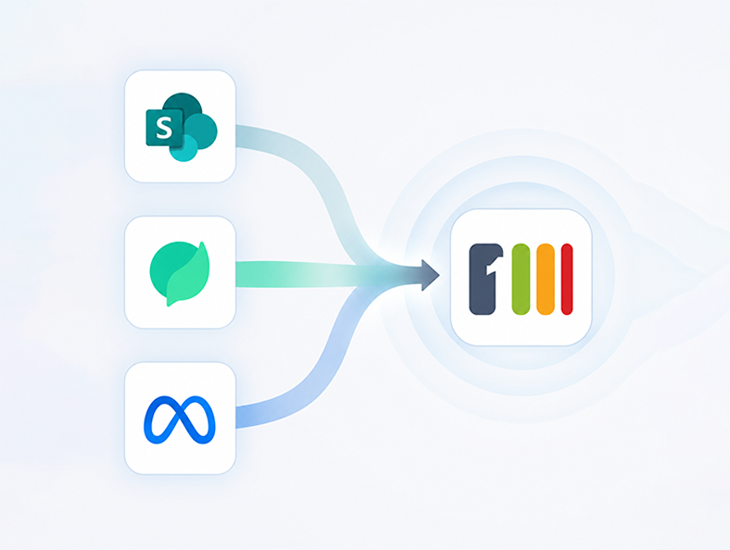
Secure Migration Center
Access specialized toolkits, expert deployment guides, and migration pathways tailored for your IT team.
Schedule a Live Demo
Book a personalized one-to-one demonstration of Steegle.One for you and your team to explore its full capabilities.
What our Customers say
-
![Adam Lee HRIP, Director, People Operations, Beyond Meat]()
“Today our new intranet is successfully developed with Steegle Tools in place and is available to all our staff around the globe. The feedback has been excellent.”
Adam Lee HRIP
Director, People Operations, Beyond Meat -
![Alexis Kropp, Senior Marketing Manager, Metz Culinary Management and Environmental Services]()
“Working with the Steegle team has been an enjoyable and seamless process. They have been a pleasure to work with, consistently responding to our questions and needs.”
Alexis Kropp
Senior Marketing Manager, Metz Culinary Management and Environmental Services -
![Dr Ian Goldstein, Co-Founder and CEO, Soar Autism Center]()
“I would highly recommend Steegle to anyone looking to create an intranet for their organization. Their team made the process easy for us”
Dr Ian Goldstein
Co-Founder and CEO, Soar Autism Center -
![Sierra Bamsey Director of Marketing and Communications, YMCA of Superior California]()
“The ease of the platform’s implementation quickly aligned with our mission to strengthen community bonds. Steegle’s support was crucial in reaching our objectives.”
Sierra Bamsey
Director of Marketing and Communications, YMCA of Superior California -
![Alex Rapoport, IT Director, apree health]()
“Steegle’s professionalism, adaptability, expertise, commitment to understanding, and addressing our unique needs, were instrumental in our successful transition to Google Sites intranet. “
Alex Rapoport
IT Director, apree health -
![Josh Wilson Project Manager, Summit Ministries]()
“The Steegle team demonstrated genuine engagement with our mission, aiding us in building an immersive, resourceful, and secure site that has become an essential tool in our daily communications.”
Josh Wilson
Project Manager, Summit Ministries





Ready to Modernize Your Digital Workplace?
Leaving SharePoint behind doesn't have to be challenging. With the right partner, it’s an opportunity to unlock greater collaboration, innovation, and value from your Google Workspace investment.
Let’s start a conversation about your unique needs and build a clear, confident path forward.
Book your free cloud migration assessment today, trusted by organizations worldwide.
Stephen Hind
Google Workspace Technical Leader

Peter Chadha
Google Workspace Transformation Leader